
After a leak or water event
Roof leaks, plumbing leaks, and wet basements or crawl spaces can create growth in hidden cavities. An inspection checks the areas that dry slowly, not just the spot that got wet.
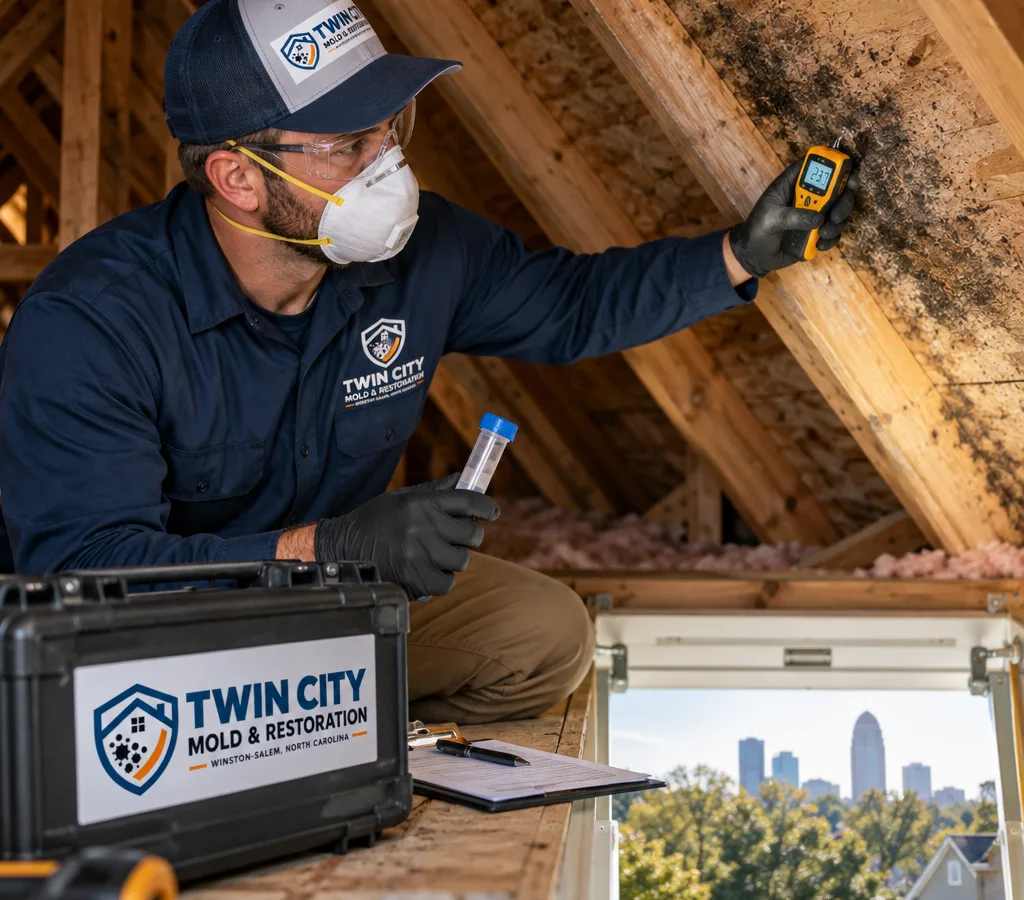
Mold inspection in Winston-Salem, North Carolina
If you are dealing with a musty odor, recent moisture, or visible spotting, get a careful inspection with clear findings and practical next steps for your home or rental.
Evidence before assumptions
A good mold inspection winston-salem visit should answer three questions in plain language: (1) Where is the moisture coming from, (2) where is mold actually growing or likely to be growing, and (3) what needs to happen next to protect the building and the people in it.
At Twin City Mold & Restoration, our inspections focus on evidence, not assumptions. We look for water intrusion pathways and humidity problems that drive growth, then document what we find so you can make a decision with confidence. This is useful whether you are a homeowner, a landlord turning a unit, or a buyer trying to understand a concern before closing.
If you already have a plan to remove mold, an inspection still helps because it defines the boundaries of the problem and the conditions that caused it. If you do not address the moisture, mold often returns even after cleaning.
When an inspection helps
Roof leaks, plumbing leaks, and wet basements or crawl spaces can create growth in hidden cavities. An inspection checks the areas that dry slowly, not just the spot that got wet.
A persistent smell often tracks back to damp building materials, a humid crawl space, or condensation issues around ducts, windows, or poorly ventilated areas.
Not every dark mark is mold, and not every mold growth is obvious. We confirm what is present and map the affected materials so you know what is cosmetic and what is structural.
When health concerns or disputes are involved, documentation matters. We provide clear notes and photos to support the next decision, whether that is repair, cleanup, or further testing.
Homes with multiple remodel eras can hide gaps in ventilation, insulation, and vapor control. We pay close attention to transitions between old and new construction.
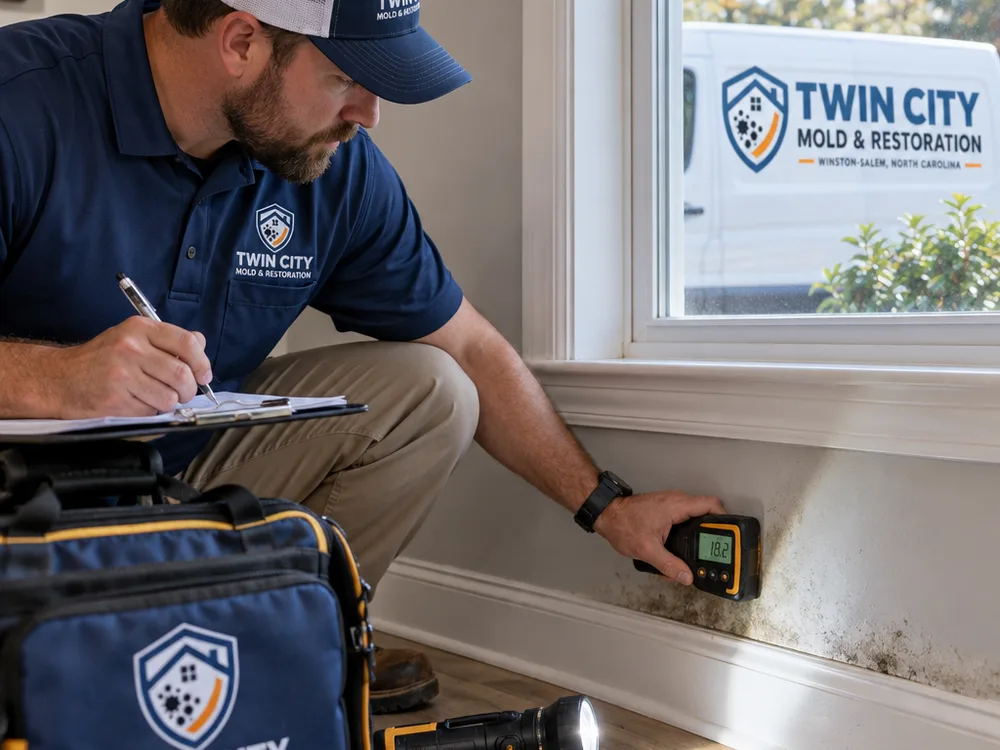
A thorough mold inspection winston salem appointment is part visual investigation and part moisture investigation. We start by listening to the story of the building: when the odor started, where water has been, what repairs were done, and which rooms feel damp.
Then we work methodically through likely risk areas:
We use standard field tools like moisture meters and thermal imaging as appropriate to find damp materials or temperature patterns that suggest moisture. When sampling makes sense, we discuss why, what the sample can and cannot tell you, and where samples should be taken to answer the real question.
Winston-Salem has a mix of slab homes, homes with crawl spaces, and older structures with additions. We see crawl space moisture and attic ventilation problems come up often, especially after heavy rain periods or when the HVAC has to work hard to control humidity.
From arrival to findings
We confirm the concern areas, ask about past leaks and repairs, and identify places where odor or symptoms are strongest so time is spent where it matters.
We inspect accessible interior areas, attic access, and crawl space or basement conditions when available. Moisture readings help separate a past issue from an active one.
If sampling is warranted, we collect it strategically to answer a specific question, such as whether a suspect area is contributing to indoor air concerns. Sampling is not always needed.
You get photo documentation and straightforward notes on what we observed, where, and why it matters. We flag safety concerns and access limitations.
We explain practical options: moisture repairs to prioritize, what materials typically need removal versus cleaning, and what a reasonable scope looks like before any work begins.
Mold inspection in Winston-Salem typically ranges from about $250 to $650 for most homes, depending on home size, access (crawl space and attic), and whether sampling is needed. A straightforward visual and moisture inspection is often at the lower end, while larger homes or inspections with multiple samples and more investigation time run higher.
Final cost depends on the number of areas to evaluate, how many readings or samples are appropriate, and how easy it is to access suspected locations. The exact price is confirmed after we understand your concerns and the layout during the inspection visit.
Moisture patterns in local homes
In Winston-Salem, mold concerns often come down to moisture control in the parts of the home people rarely see. Crawl spaces can stay damp after heavy rain, and that moisture can move up into flooring systems and wall cavities. Attics can also be a problem when warm, humid air meets cooler roof decking or when bathroom fans vent poorly.
We frequently inspect homes in areas like Ardmore, where older construction and ongoing renovations can create mixed ventilation conditions, and in West End, where historic homes may have older framing and additions that were built under different standards. In newer growth areas such as Clemmons and Kernersville, we still see issues when grading, gutters, or HVAC humidity control is not keeping up with seasonal moisture.
If you are trying to decide whether you need an inspection or full remediation work, start with the basics: identify the water source, confirm where growth is present, and document it. When the situation points beyond inspection and into cleanup planning, the scope for mold removal should be based on what is actually affected and what needs to be opened to reach wet materials.
Homeowner and landlord experiences
“We had a musty smell that came and went. The inspection showed the worst area was actually under the floor near the HVAC, not the room we expected. The photos and notes made it easy to explain to our contractor what needed to be fixed.
“As a landlord, I needed something clear for my records. The inspector walked the unit with me, checked the crawl space, and laid out what was active moisture versus old staining. That saved a lot of back-and-forth.
Answers before your visit
A visual and moisture inspection is often enough to identify likely growth and the moisture source, and sampling is best used to answer a specific question. For example, if you have a hidden area with suspected growth or need documentation for a buyer or tenant situation, targeted sampling can be useful. If growth is already clearly visible and the moisture source is obvious, the inspection may focus more on mapping extent and planning next steps than on testing.
Most mold inspections take about 60 to 120 minutes, depending on home size and how many areas need to be checked. A home with an accessible attic and crawl space, multiple bathrooms, or several concern areas usually takes longer because the moisture checks and documentation are more involved.
Yes, as long as it is safe and reasonably accessible, we can inspect tight crawl spaces and attic areas with proper lighting and protective gear. If access is unsafe or blocked, we document the limitation and explain what changes would be needed to complete the inspection, since hidden damp materials in crawl spaces and attics are common drivers of mold concerns in this region.
Yes, you will get straightforward guidance on likely moisture causes and what a reasonable next step looks like. That may include recommendations like improving drainage and gutters, correcting a roof or plumbing leak, addressing ventilation in a bathroom, or controlling humidity in a crawl space. We focus on what is actionable and what should be prioritized first.
In most cases, yes, you can stay in the home during a mold inspection, since it is primarily an evaluation and documentation visit. If we find conditions that suggest a higher exposure risk in a specific room or area, we explain practical precautions while you arrange repairs or cleanup.
Yes, inspections for rentals can often be scheduled quickly, and turnovers are a common reason to inspect. If a unit is empty, we can usually move faster through closets, cabinets, and utility areas, and we can document findings in a way that supports a repair plan and tenant communication.
Start with an on-site inspection
Describe what you are seeing or smelling and when it started. We will schedule a mold inspection and provide written findings that help you decide on repairs, cleanup scope, and what to do next.