A written scope before heavy work starts
You get a clear plan for containment, removal, cleaning, and drying so you know what is included and what comes next.
Mold remediation in Winston-Salem, North Carolina
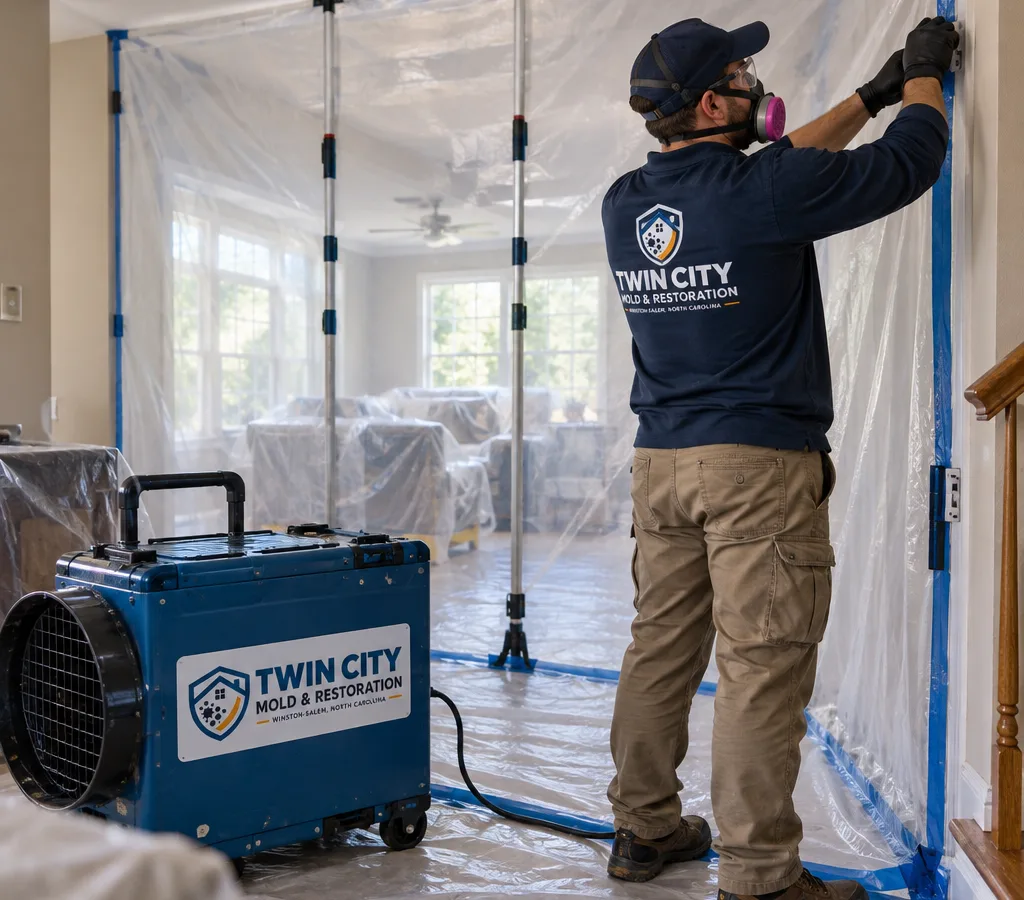
If you smell a musty odor, see staining, or have had a leak, you need more than surface cleaning. We find the moisture source, contain the work area, remove contaminated materials when needed, and restore the space so mold does not return.
Inspection-led cleanup
When people search for mold remediation Winston-Salem, they are usually dealing with one of three situations: visible growth, a persistent musty smell, or a recent moisture event like a plumbing leak, roof intrusion, or HVAC condensation.
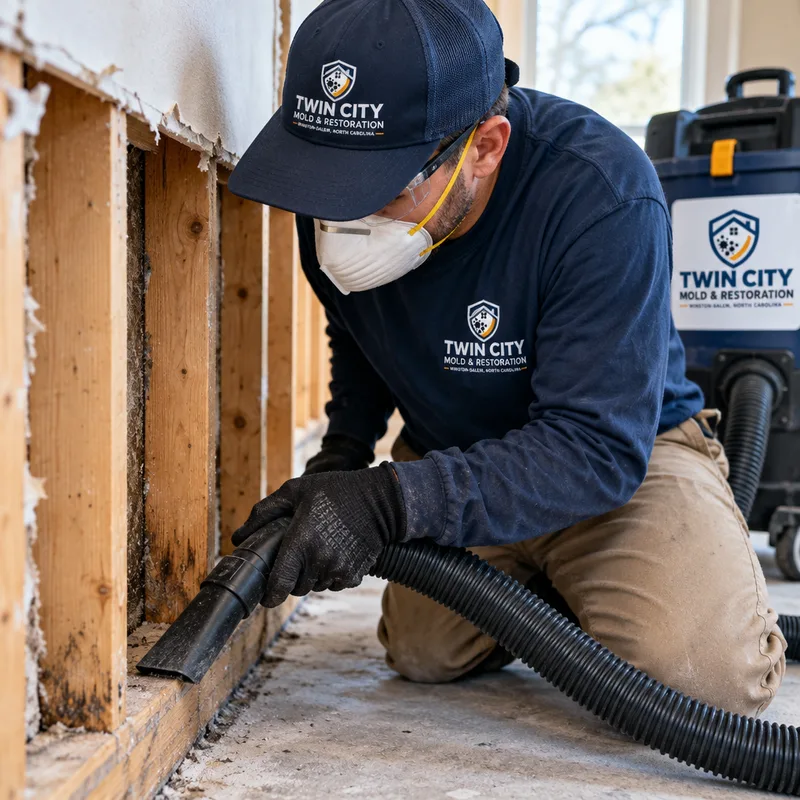
Proper mold remediation is a controlled cleanup process that protects the rest of the home while removing affected building materials and cleaning remaining surfaces. It typically includes:
The most important part is moisture control. Mold is a symptom of water. If the leak, humidity, or condensation issue is not corrected, the mold often returns even after aggressive cleaning.
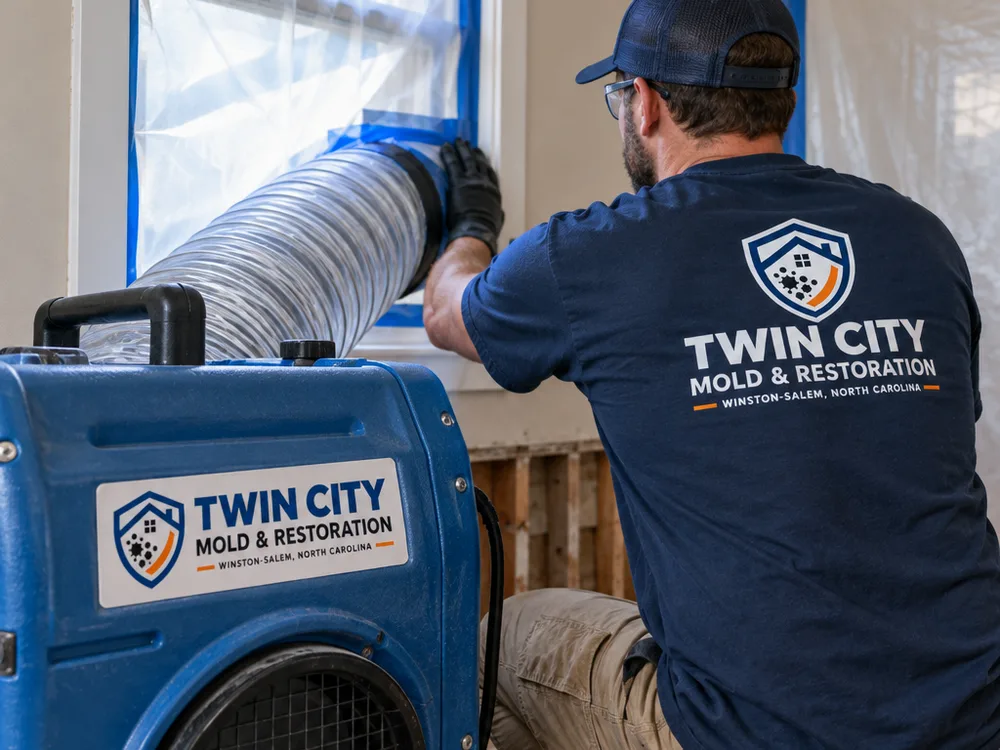
Twin City Mold & Restoration handles mold cleanup as a step-by-step project with clear boundaries: what is impacted, what needs removal, how containment will be set, and what the area should look like when it is ready for repairs.
In Winston-Salem, we often see mold tied to everyday moisture problems: slow plumbing leaks under sinks, condensation around air handlers, poorly vented bathrooms, wet crawlspaces, or water intrusion after storms. Homes with crawlspaces and older duct runs can also move humid air through the structure, so we pay close attention to how the home breathes.
Our remediation work is built around industry-standard controls that reduce cross-contamination:
If you are also comparing options for broader cleanup and restoration work after water damage, the Mold Removal overview can help you understand how remediation fits into the full recovery plan.
Controlled remediation standards
You get a clear plan for containment, removal, cleaning, and drying so you know what is included and what comes next.
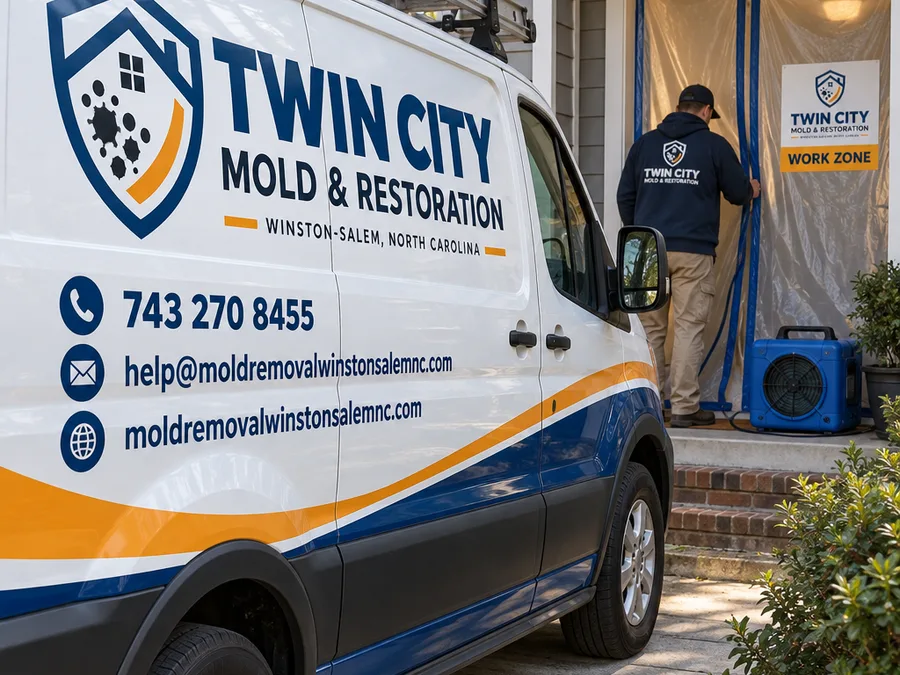
We focus on preventing spore migration into hallways, adjacent rooms, and return air pathways during demolition and cleaning.
HEPA air scrubbers and HEPA vacuums are used where appropriate to capture fine particles during cleanup.
Remediation without moisture correction is temporary. We look for the conditions that allowed growth and outline the fixes needed to prevent recurrence.
After remediation, many projects need drywall, trim, paint, or flooring repairs. We explain what materials were removed and what a normal rebuild sequence looks like.
From inspection to handoff
We inspect visible growth, check likely moisture paths, and define the work area so the scope matches the real conditions in walls, ceilings, basements, or crawlspaces.
If there is active water, that gets addressed first. We also identify humidity or condensation drivers, including bath ventilation, HVAC issues, or wet building materials, that can keep feeding growth.
We install plastic barriers and, when needed, establish negative air so disturbed spores do not spread through the home.
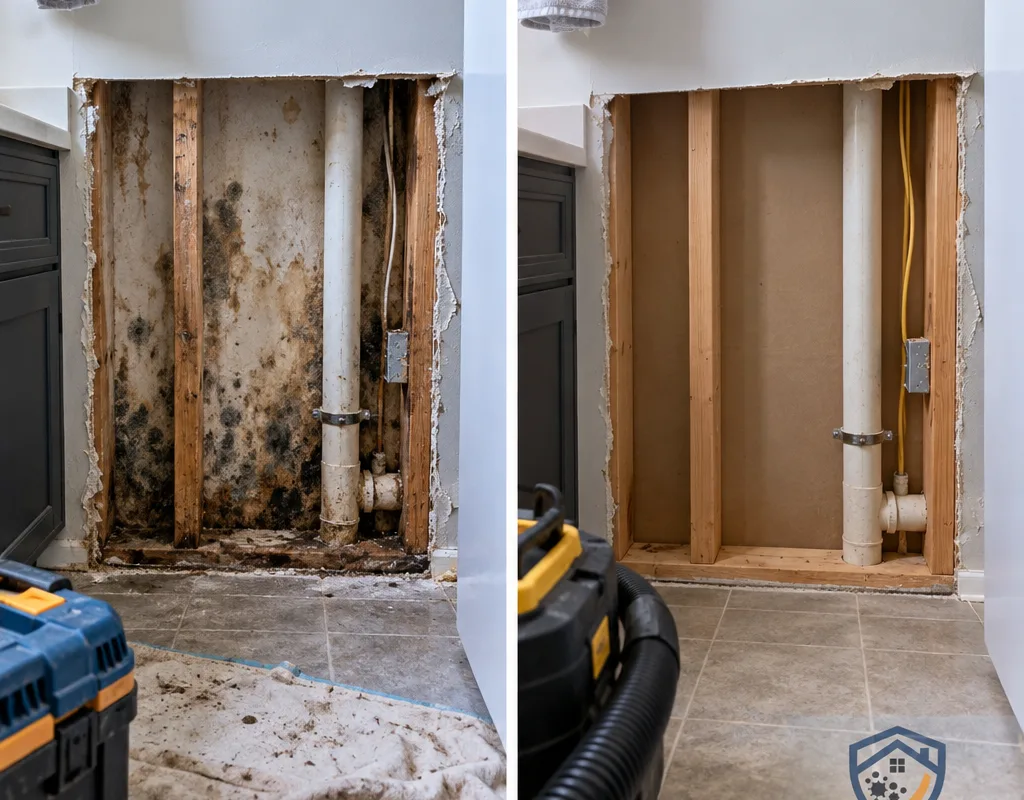
Porous materials that cannot be reliably cleaned are removed. Remaining framing and surfaces are HEPA vacuumed and cleaned. Antimicrobial products are used when appropriate for the substrate and conditions.
We complete detailed wipe-down and HEPA filtration, confirm the area is dry and stable, and review next steps for repairs so you can move forward with confidence.
Mold remediation in Winston-Salem typically ranges from about $1,000 to $6,000+, with small, contained areas often landing around $1,000 to $2,500 and larger projects involving multiple rooms or significant drywall removal commonly running $3,000 to $8,000+.
Final pricing depends on the size of the affected area, where the mold is located, how much demolition and rebuild prep is required, access constraints, and what containment and HEPA filtration setup the job needs. The exact cost is confirmed after an on-site inspection and a written scope.
Controlled work in real homes
Answers before work begins
Most mold remediation projects take 1 to 3 days for cleanup, plus additional time if drying is needed before repairs begin. The timeline depends on how many materials must be removed, whether the moisture source is active, and how quickly the structure can be dried to a stable level.
Sometimes, but only when the affected material is non-porous or the growth is truly on the surface. If mold is in drywall, insulation, or other porous building materials, removal is usually the reliable option because those materials are difficult to clean all the way through.
Often yes for small, well-contained projects, but it depends on the location and scope of work. If remediation involves a main living area, HVAC return pathways, or extensive demolition, we may recommend limiting access to the work zone or making temporary arrangements, especially for people with respiratory sensitivities.
Yes, they are a key part of professional mold remediation because they help control where air and spores move during removal and cleaning. Containment and negative air reduce the chance of cross-contamination into adjacent rooms and the rest of the home.
Avoid disturbing the area and do not run fans that blow directly across visible mold, since that can spread spores. If it is safe, stop the water source and keep doors to the affected area closed until we can assess containment needs.
Bleach can discolor stains on some non-porous surfaces, but it does not reliably solve a moisture-driven problem and is not appropriate for many building materials. Mold remediation works when the moisture condition is corrected and affected materials are removed or cleaned using the right methods for that substrate.
Start with an on-site inspection
Tell us what you are seeing and where it is happening. We will inspect the area, identify the moisture driver, and provide a written remediation scope so you can move forward with a safe cleanup and a solid prevention plan.